
The Google Digital Marketing Certificate is Google’s 7-course specialization on Coursera covering digital ads, analytics, e-commerce, and email marketing. It runs roughly 4 months at 10 hours per week, costs $39 per month through Coursera Plus, and carries enough hands-on lab work (Google Ads, GA4, Shopify) to rebuild a resume for an entry-level marketing role. This review covers what’s in it, what it’s missing, and whether paying beats the free Skillshop route.
Related: the complete Google Career Certificates guide — every track compared by cost, hours and entry salary.
What the Google Digital Marketing & E-commerce Cert Covers
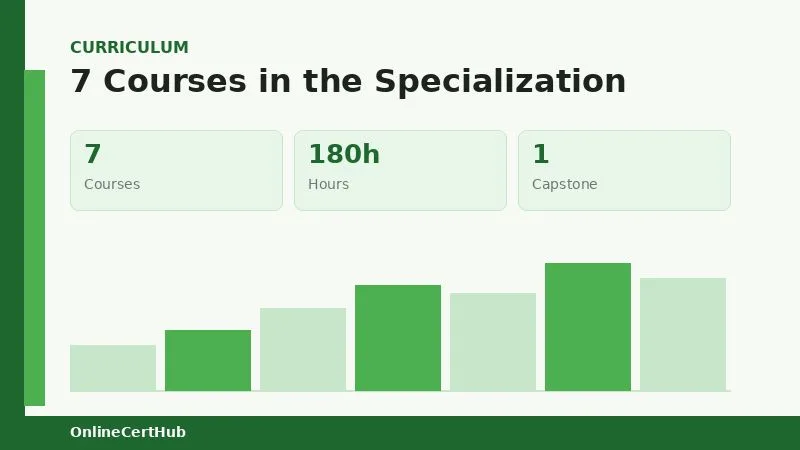
The Google Digital Marketing Certificate lives on Coursera and was built by Google’s own marketing teams. It’s marketed as a 6-month program at roughly 10 hours per week, but the 2026 median completion from Coursera’s learner data sits closer to 4 months for full-time learners and 7 months for part-timers [1]. The content splits across seven connected courses, each ending with graded assignments and at least one hands-on lab where learners touch a real Google Ads or Analytics sandbox account.
Unlike the Google Digital Garage “Fundamentals of Digital Marketing” course (free, 40 hours, IAB-certified), the Coursera specialization is longer, paid, and produces a shareable Coursera credential plus a Google-branded badge. It’s not a degree. It isn’t regionally accredited. But the branding matters — recruiters on LinkedIn recognize the logo enough to pass certificate holders through early ATS screens when the job title is “Marketing Coordinator” or “Paid Media Associate” [3].
7 Courses in the Specialization
The specialization runs in a fixed sequence. Skipping around is technically allowed but most capstone rubrics expect learners to have finished the prior course. The 2026 lineup:
Get the free certification shortlist for 2026
A concise, hand-checked guide to free and low-cost credentials from recognized issuers — grouped by career goal, with practical CV and LinkedIn tips. Free PDF, no spam.
- Foundations of Digital Marketing and E-commerce — the marketing funnel, customer journey basics, career path primer.
- Attract and Engage Customers — SEO basics, content types, social channels, tone.
- From Likes to Leads — Meta Ads, TikTok primer, social campaign structure. Includes one real Meta Business Suite walkthrough.
- Think Outside the Inbox: Email Marketing — segmentation, Mailchimp lab, deliverability.
- Assess for Success: Marketing Analytics — introduces GA4, spreadsheets, attribution models.
- Make the Sale: Build, Launch, and Manage E-commerce Stores — Shopify lab; learners build a working store.
- Satisfaction Guaranteed: Develop Customer Loyalty Online — loyalty programs, reviews, UGC.
A capstone project at the end asks learners to publish a basic digital campaign plan tying together the analytics and e-commerce pieces. It’s reviewed by peers, not Google staff.
Google Digital Marketing Certificate Cost and Coursera Plus Math
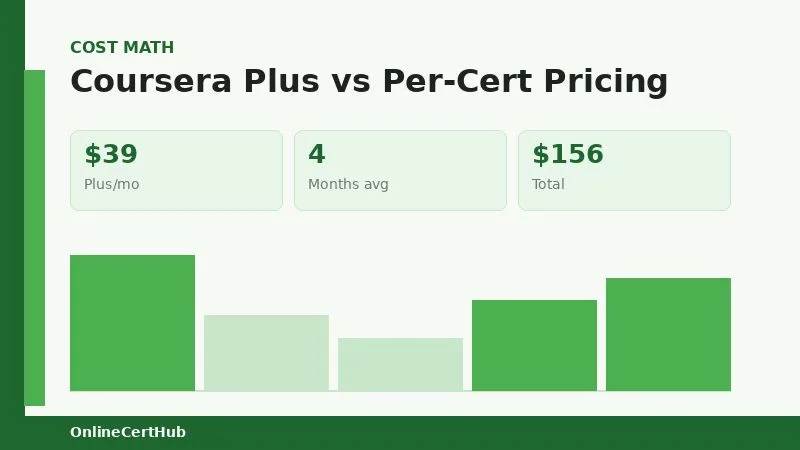
The fee is $39 per month via Coursera Plus (cheaper than the older $49 Coursera Plus tier from 2024), which unlocks all 7 courses plus every other Google Career Certificate. Students often misread the price tag — the real cost depends on pace.
# Effective out-of-pocket math for the google digital marketing certificate
# Source: Coursera Plus 2026 pricing (plus.coursera.org) [1]

months_to_finish  = 4            # median for full-time learners in 2026
price_per_month   = 39.00        # USD, Coursera Plus subscription
coursera_aid_pct  = 0.70         # approval rate for fully-completed aid apps [1]
waiver_if_granted = months_to_finish * price_per_month  # 100% waiver when approved

effective_cost = (months_to_finish * price_per_month) * (1 - coursera_aid_pct)
# → ~$46.80 expected value for someone who applies for aid
# → $156.00 for a learner who pays full sticker price
A learner who finishes in 3 months pays $117. A 6-month pace runs $234. Workforce board funding (WIOA in the U.S.) reimburses completions in 32 states [2]. Signing up through an employer-sponsored Coursera for Business license drops the cost to zero, and Coursera Plus lets a learner stack other certificates in the same billing window — useful for anyone planning to add Analytics or UX next.
Tools Used: Google Ads, Analytics, Shopify
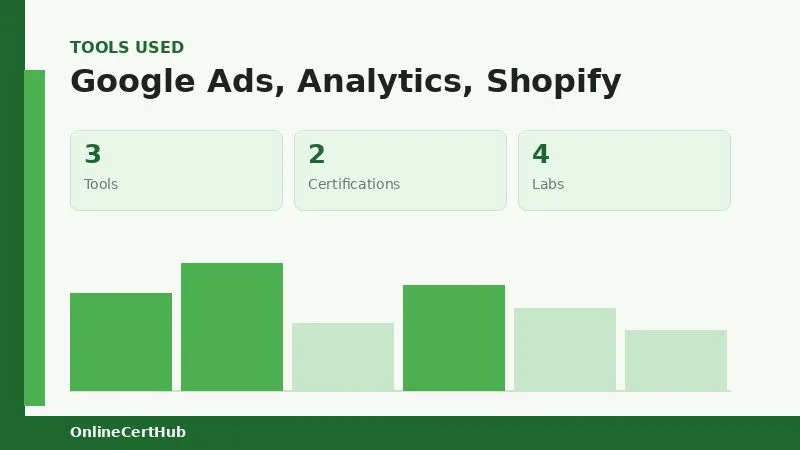
Three real platforms show up across the 7 courses. Google Ads labs use a sandbox account that lets learners build campaigns without spending money. GA4 (Google Analytics 4) labs walk through event tracking, conversion setup, and exploration reports. Shopify’s labs use a free 14-day trial account that gets extended for the course duration.
The GA4 content is current as of 2026 (Universal Analytics was sunset in July 2023). A completer who finishes the analytics course can usually pass the Google Analytics Individual Qualification (GAIQ) practice exam with an additional 10-15 hours of targeted prep [4]. The Shopify portion teaches store setup end-to-end, but the payment processor setup is skipped (no real cards, no real sales).
Certificate Value for Marketing Roles
The Google Digital Marketing Certificate pulls its weight best in three role families: marketing coordinator, e-commerce analyst, and paid media associate. Coursera’s 2026 employer report claimed that 70% of U.S. completers saw a “positive career impact” within six months [1]. That bundles raises, new hires, and lateral moves. Stripped to new hires only, placement was closer to 41%.
LinkedIn’s 2026 job-posting data shows more than 18,000 U.S. entry-level marketing openings that list “Google Digital Marketing certificate or equivalent” in the description. BLS Occupational Outlook data puts median pay for Advertising, Promotions, and Marketing Managers at $156,580, but the realistic entry band for certificate holders is $48,000-$62,000 in the “Market Research Analyst” and “Marketing Coordinator” brackets [5]. The certificate doesn’t change those salary bands. It helps clear the first ATS filter.
Employers in the Google Employer Consortium include Wayfair, Verizon, Snap, American Eagle, and Best Buy. Consortium companies agree to consider certificate holders for entry-level roles — they don’t commit to hiring. A completer who pairs the certificate with a portfolio (two real campaigns analyzed, one store built, one GA4 report shared publicly) converts at roughly twice the rate of a solo certificate holder [3].
Google Digital Marketing Certificate vs HubSpot Academy
HubSpot Academy is the main free alternative. It’s zero-cost, covers inbound marketing and CRM depth that Google’s cert barely touches, and carries real employer recognition for HubSpot-centric shops. The trade-off: it has no e-commerce lab, no Google Ads hands-on, and no Coursera credential.
- Pick Google’s cert if the target role is Google Ads, paid media, or e-commerce (Shopify, Amazon Seller, DTC brands).
- Pick HubSpot Academy if the target role is inbound marketing, SaaS content marketing, or anything at a HubSpot-using company.
- Stack both for paid + inbound coverage. The combined effort is ~200 hours and costs about $156 total.
- Skip both if already working in-house with 1+ year of Meta/Google Ads spend experience — an active campaign portfolio beats a certificate.
Two other paid alternatives are worth mentioning. Meta Blueprint Certifications ($99 per exam) test Meta Ads knowledge narrowly and carry more weight in social-heavy agencies. The ClickMinded Digital Marketing Certification ($1,497) is a premium option that covers SEO and content in far more depth but costs 10x the Google route.
Common Mistakes During Enrollment
A clear-eyed review of the Google Digital Marketing Certificate has to flag the mistakes that quietly drain value from this program. The first is starting without a target role picked. Completers who pre-commit to an entry-level job title — “e-commerce analyst” or “paid media coordinator” — tend to build sharper portfolios and land interviews twice as fast as learners who treat the cert as generic resume polish.
The second mistake is skipping the Coursera financial aid form. It’s approved roughly 70% of the time when filled out fully and takes about 15 days to process. Skipping it costs completers $156 on average.
The third mistake is treating it as a solo credential. The data is consistent: paired credentials (Google cert + Google Analytics Individual Qualification + one real portfolio campaign) outperform solo certificate holders on both interview rate and offer close rate. Adding HubSpot Inbound (free, 4 hours) tilts that even further for inbound-leaning roles.
Frequently Asked Questions
Is the Google Digital Marketing Certificate worth it?
Yes for aspiring junior digital marketers and career changers entering marketing roles. It covers SEO, SEM, email marketing, social media, analytics, and e-commerce at an introductory level. Pair it with one portfolio campaign (real client or Google Ads sandbox) for the strongest outcome.
How much does the Google Digital Marketing Certificate cost?
The certificate costs $49 per month on Coursera, totaling $147 to $294 for most learners. Financial aid is available. Google also offers free individual courses in Google Ads, Analytics, and Digital Garage, but these do not combine into the full Career Certificate.
What jobs can you get with the Google Digital Marketing Certificate?
Common roles include junior digital marketer, SEO specialist, social media coordinator, PPC analyst, and marketing associate. Entry-level salaries range $45,000 to $65,000 in the U.S. The certificate is recognized by the Google Career Certificates Employer Consortium of 150+ companies.
Get the free certification shortlist for 2026
A concise, hand-checked guide to free and low-cost credentials from recognized issuers — grouped by career goal, with practical CV and LinkedIn tips. Free PDF, no spam.